
What changed
eTIMS started life as a VAT tool. In 2026 it became the backbone of income tax checks. KRA now compares what you declare against the invoices recorded in eTIMS, your withholding tax returns and your import data. When the numbers don't agree, KRA can query them — or simply disallow the difference.
KRA gave businesses a one-time concession when filing their 2025 returns, allowing some expenses without eTIMS invoices to be declared. That window closed with the June 2026 filing deadline. Going forward, an expense without a valid electronic invoice is a tax risk, not just an admin gap.
Sales: issue the invoice at the moment of sale
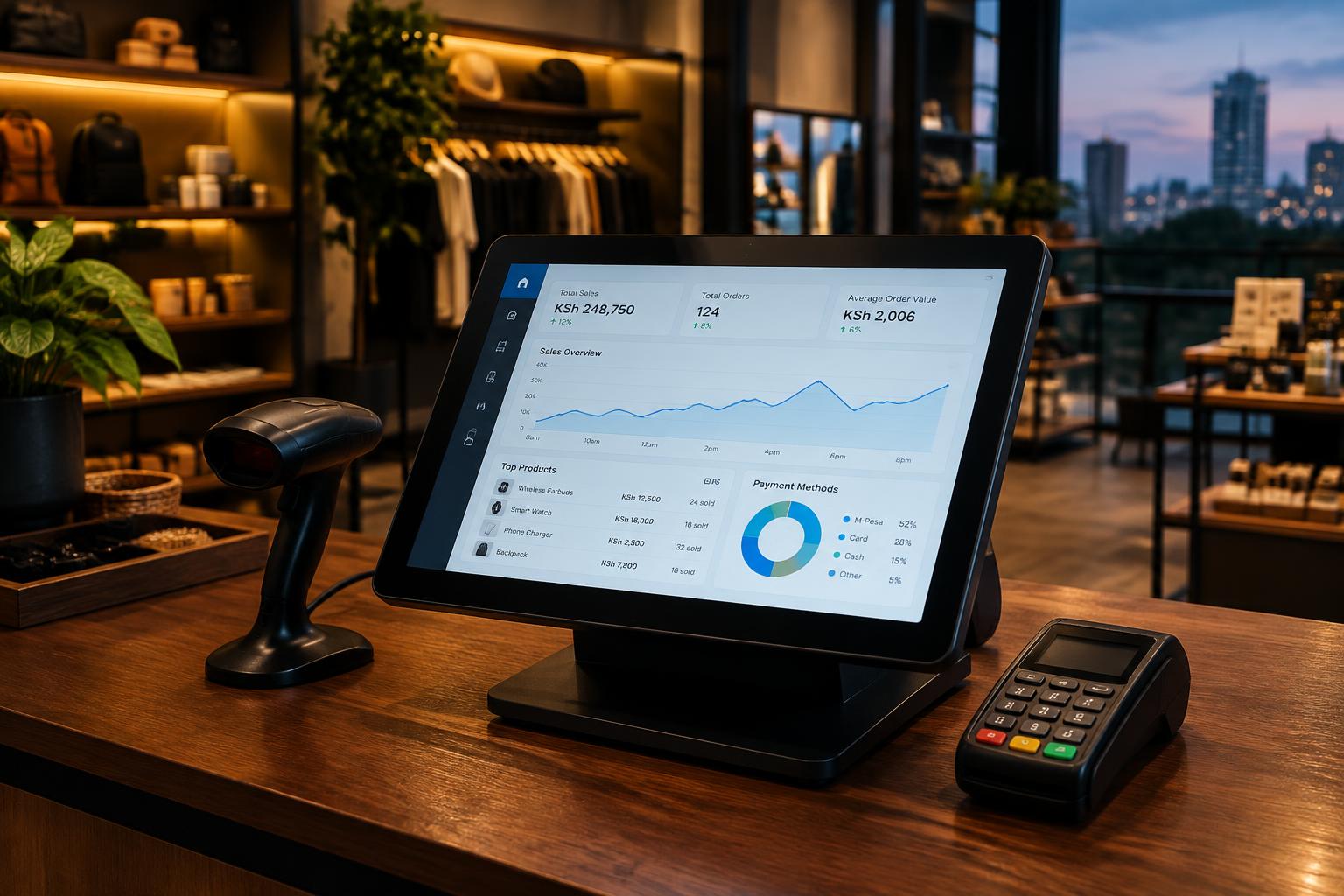
If your cashier rings up a sale on one system and issues the tax invoice on another, something will eventually fall through the cracks: a busy Saturday, a power cut, a new staff member. The safest pattern is for your POS or invoicing system to transmit the eTIMS invoice automatically as part of completing the sale.
That also gives you a clean audit trail. Every receipt carries its control unit number, every return or credit note links back to the original sale, and your daily sales report matches what KRA sees.
Expenses: your suppliers are now part of your compliance
On the purchasing side, the invoice your supplier issues determines whether you can claim the expense. If they don't capture your KRA PIN, the expense may not appear against your PIN and can be disallowed.
Make it routine: share your PIN with every supplier, check new suppliers are on eTIMS before you start buying from them, and reconcile your purchase records against your eTIMS expense data every month rather than once a year.
A practical setup for a growing business
Connect your POS and online shop to eTIMS so every sale is invoiced automatically. Keep your product catalogue's tax codes correct in one place. Store supplier invoices digitally against each purchase. Run a monthly reconciliation and fix gaps while they are small.
None of this needs to be complicated, but it does need to be built into how you sell and buy. Compliance that depends on someone remembering will fail; compliance that is part of the system won't.
Want this set up properly?
Tell us how your business runs today and we'll show you the practical next step.