Start with how you actually sell
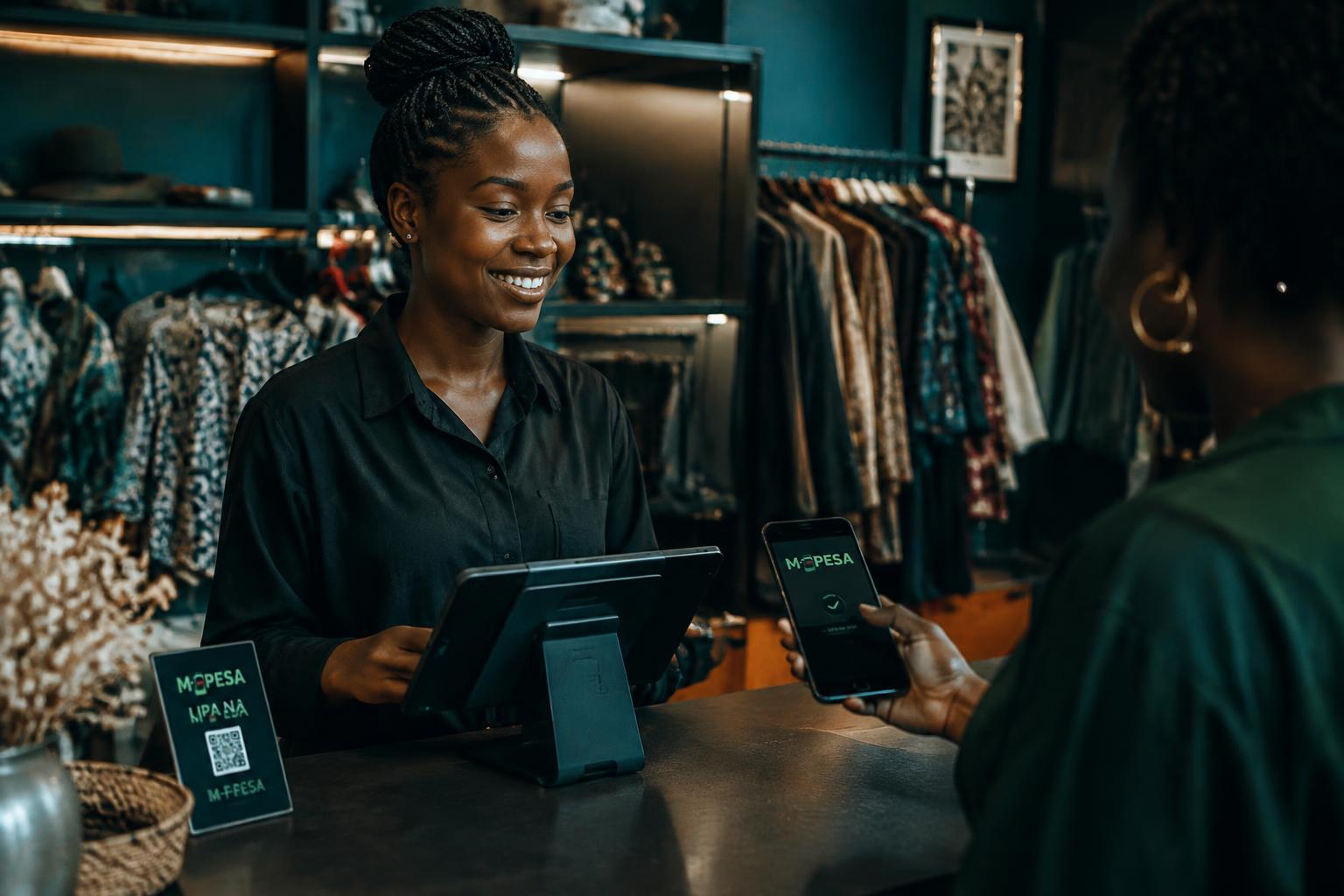
A good POS mirrors your counter, not the other way round. List what happens at your till in a busy hour: scanning items, applying discounts, splitting payments between cash, card and M-PESA, handling returns and serving the next customer while the receipt prints. Any system you consider should make those exact moments fast.
Think about who uses it. If staff turnover is high, it must be learnable in an afternoon. If you're rarely on site, you need a live view of sales from your phone, not an end-of-day printout.
Stock, payments and tax must move together
The real value of a modern POS is that every sale updates everything at once: stock levels, the payment record and the eTIMS invoice. That means low-stock alerts before you run out of your best seller, payments that reconcile themselves, and tax records that match what KRA sees.
Ask how the system behaves when the internet or power drops. Know exactly what happens to a sale in progress, and how quickly the till recovers.
Plan beyond one counter
Even with one shop today, choose a system that can add a second branch, a delivery partner or an online store without starting over. Shared stock, shared customer records and combined reports are much harder to bolt on later than to have from the start.
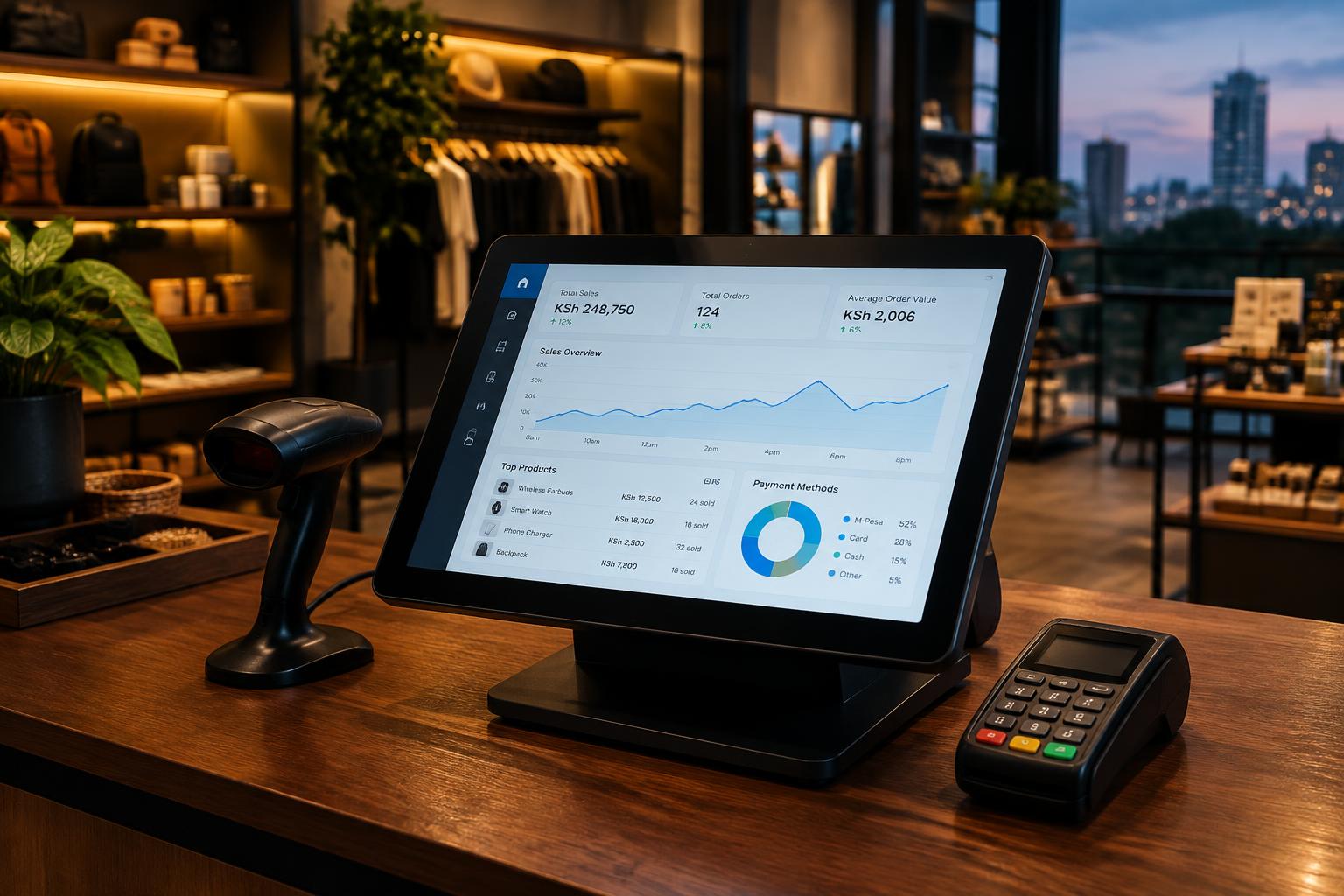
Finally, look at the numbers it gives you. Sales by product, by hour and by payment method tell you when to add staff, what to promote and where margin is leaking. A POS that only records totals is a cash register with a screen.
Want this set up properly?
Tell us how your business runs today and we'll show you the practical next step.